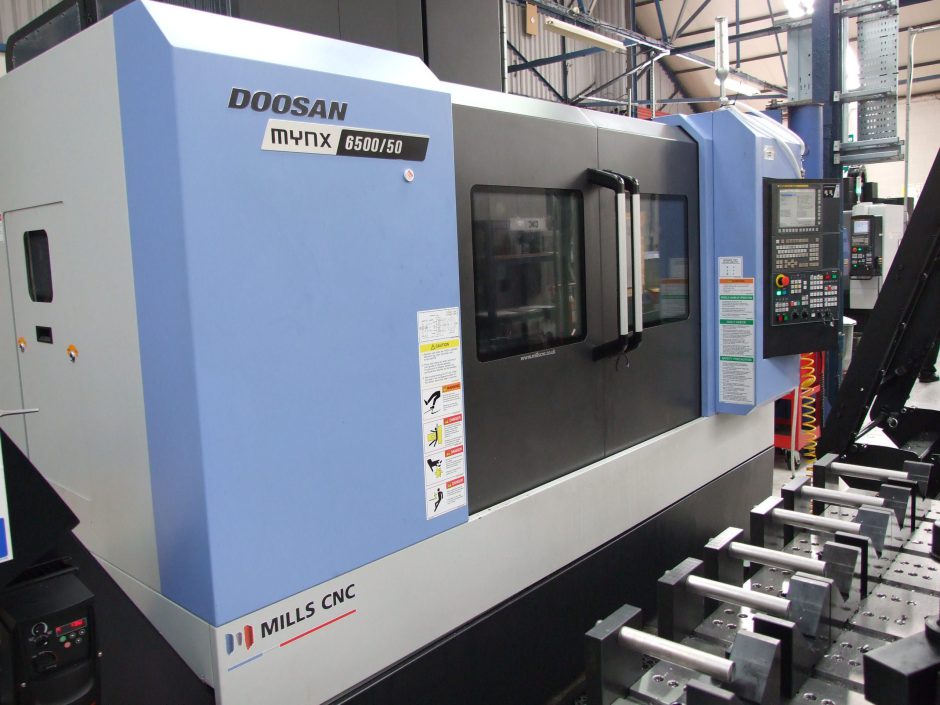
Leading specialist fastener and hot forged bolt manufacturer invests in three new Doosan machines from Mills CNC to meet the growing demand for its products and solutions from offshore and subsea drilling, production and processing equipment customers.
Mills CNC, the exclusive distributor of Doosan machine tools in the UK and Ireland, has recently supplied three new Doosan machines to Mellish Engineering Services – a private, family-owned specialist precision manufacturer of performance-critical, high-integrity and fully-traceable fasteners and hot forged bolting used extensively, but not exclusively, in the oil and gas sector.
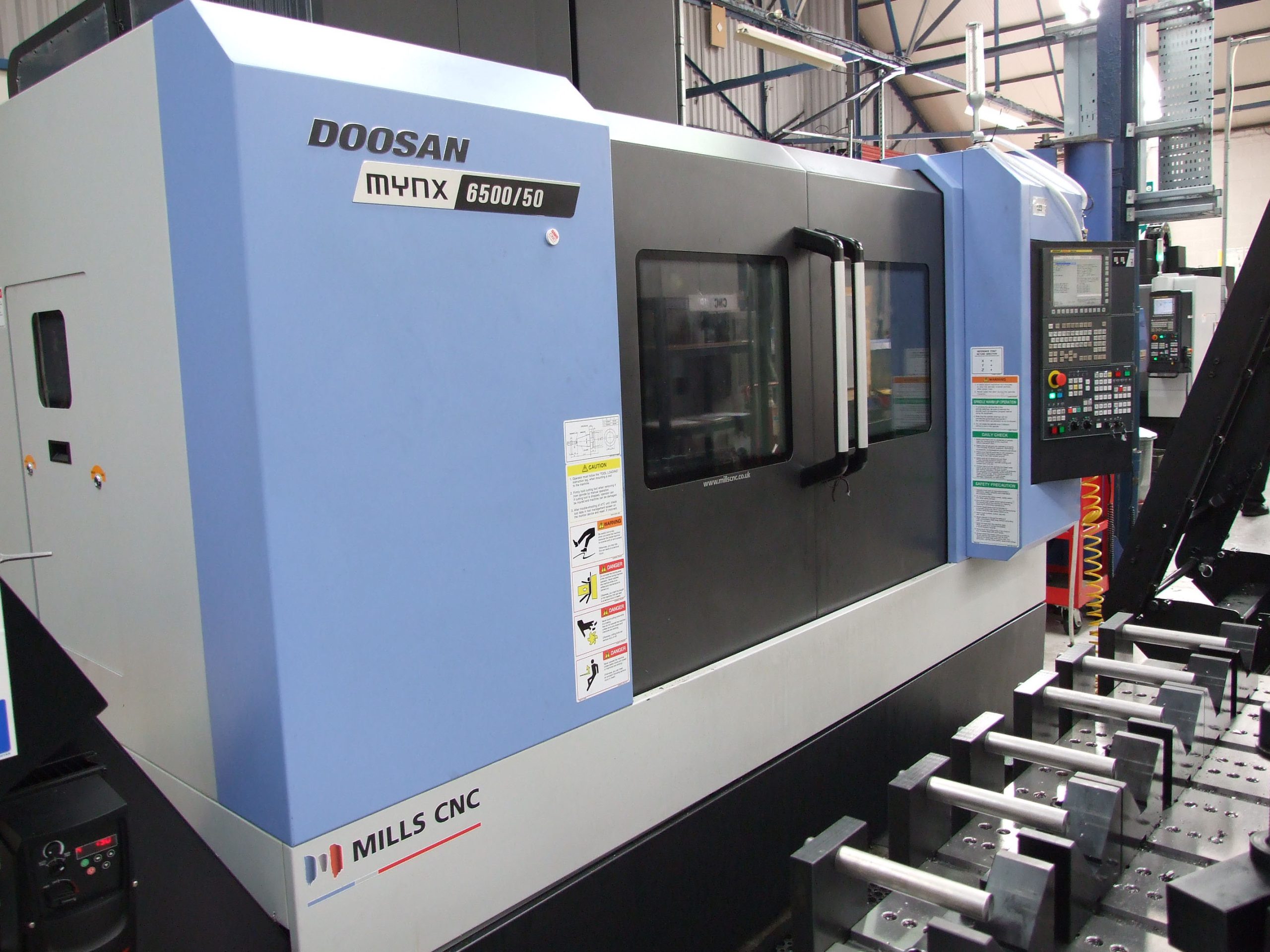 The machines – a Mynx 6500/50 large-capacity vertical machining centre, a Puma 2600SY Mk II multi-tasking lathe and a compact, high-performance DNM 4000 vertical machining centre were installed at the company’s 26,000 square foot facility in Aldridge during August and September 2018.
The new Doosan’s are being used to machine a range of high-precision, performance-critical standard and non-standard fastener components that include bolts, pins, clamps, studs, nuts, washers etc. These components are all made from hard and difficult-to-machine materials (i.e. Duplex and Super Duplex stainless steels, carbon steel, titanium, Inconel, Monel etc.) and are machined to tight dimensional tolerances and high-quality surface finishes.
They are machined in small batches (i.e. one-offs) right through to larger volumes to suit individual customer requirements.
A growth in demand
Mellish-manufactured fastener systems and solutions are in high demand.
This demand has been fueled, in no small part, by the company achieving API (American Petroleum Institute) certification back in 2017.
Explains Mark Rattenberry, Mellish’s Managing Director:
“The global oil and gas industry has always been volatile, and oil price fluctuations are nothing new.
“However, the spectacular and rapid fall in oil prices, from a peak of $115 per barrel in June 2014 to under $35 at the end of February 2016 had a serious knock-on effect on our business resulting in reduced sales revenues and an unwelcome squeeze on company profitability.”
2014, as it would later transpire, proved to be a ‘watershed’ year for Mellish. Because, instead of ‘battening down the hatches’, cutting overheads and riding out the down turn – the company made the strategic decision to plan ahead and invest in its future.
Continues Mark Rattenberry:
“We took a long-term view and looked at ways to increase our share in a relatively flat, and sometimes declining, market.
“A key decision we made was to gain API certification which, we believed, would not only differentiate us from our competitors but would also, in the highly-regulated oil and gas sector where environmental and health and safety (EHS) concerns are paramount, position us as an approved quality supplier.”
In 2017 Mellish achieved its ambitions gaining API Q1, API 20E and API 20F certification. (Mellish is one of only a handful of companies across Europe to have achieved these standards and as a consequence, able to use the official API monogram on its machined products).
“API accreditation is the ‘Gold Standard’”, says Mark Rattenberry. “It is an internationally recognised and accepted kite-mark that has had a positive impact on sales”
Since 2017 Mellish has experienced a marked increase in the number of companies, from around the world, making contact…enquiring about the company’s solutions…and, ultimately, placing orders.
Meeting the demand
To meet the growing demand for its fastener systems and solutions Mellish, as part of its company-wide continuous improvement programme, makes regular investment in its people, plant, equipment, processes and systems.
Says Mark Rattenberry:
“We are always looking at ways to increase productivity and improve performance – and regularly audit and review our manufacturing processes to see how and where they can be improved.
“Our future depends on us maintaining quality standards, meeting customer lead times and controlling costs. To help us do this we invest in the latest advanced machine tool technologies.”
The recent acquisition of the three new Doosan machines is a case in point and is evidence of Mellish’s continuous improvement programme in action.
The Doosan machines:
Mynx 6500/50
The Mynx 6500/50 is a rigid, large-capacity, box guideway vertical machining centre with a large working envelope (X-, Y- and Z-axis travels = 1270mm x 670mm x 625mm), a large work table (1400mm x 670mm) and equipped with a powerful, high torque BT50 spindle (15kW/6000rpm).
The Mynx 6500/50 was purchased following the completion of a successful cutting trial undertaken at Mills CNC’s Technology Campus facility. The trial was intended to demonstrate the Mynx 6500/50’s cutting capabilities and its ability to reduce part cycle times when machining titanium tie-rod components.
Says Mark Rattenberry:
“The Mynx 6500/50 is a rigidly-built and constructed machine that is ideal for heavy-duty machining operations, and for machining the hard materials we use to manufacture our fasteners.
“In the machining trial (and the subsequent machining process developed by Mills), the part cycle times for machining each titanium component was reduced by 15 minutes.
“This improvement in productivity combined with the machine’s large working envelope, which we knew we could exploit to machine multiple parts in a single set-up, were the principal reasons why we purchased the machine.”
Since being installed Mellish has its focused efforts on refining and optimising the machining process and has invested in a state-of-the-art manual twin pallet change system that is positioned in front of the machine enabling virtually continuous production with minimal operator intervention.
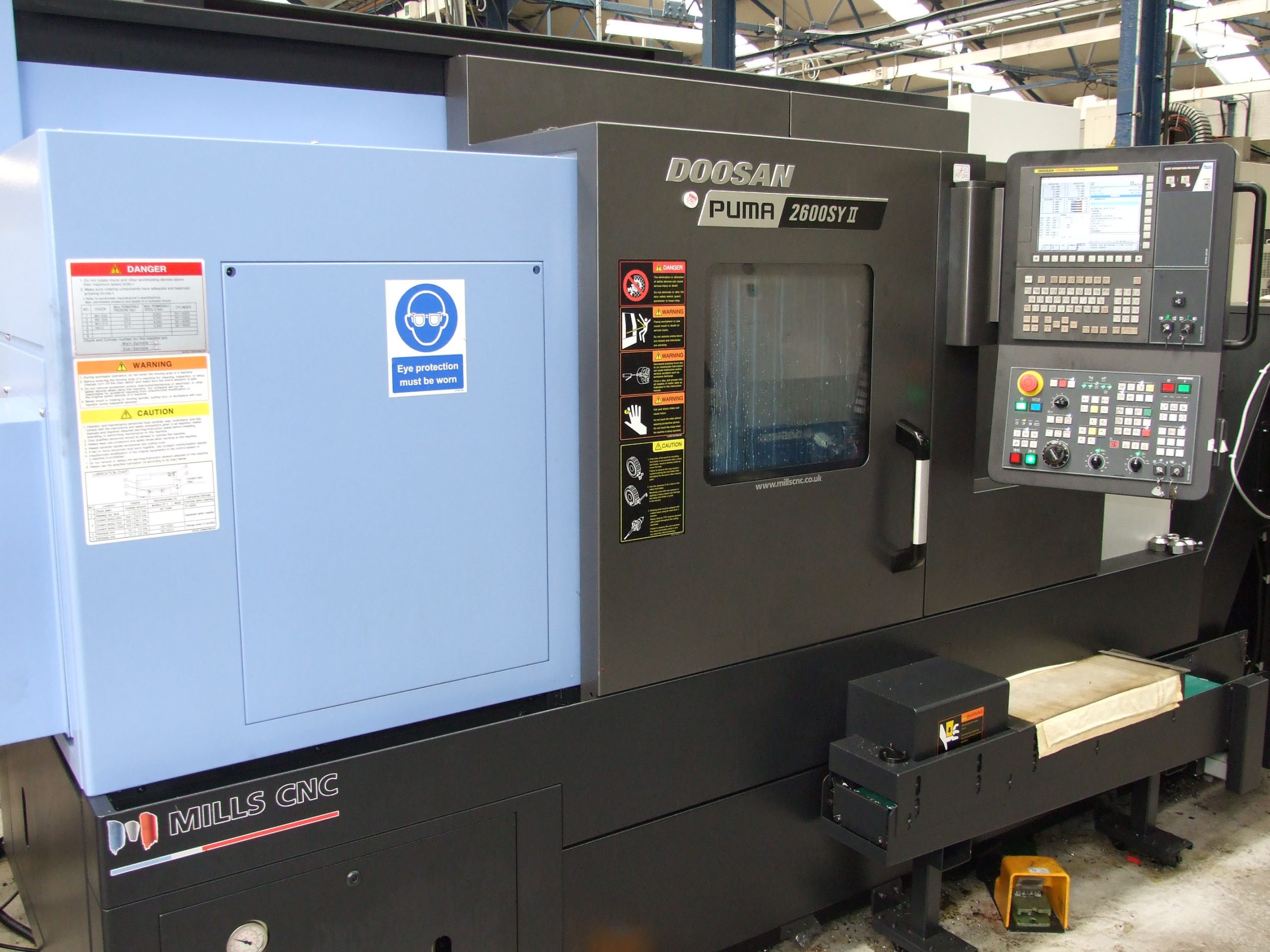 Puma 2600SY Mk II
The 10” chuck/76mm bar diameter Puma 2600SY Mk II is a versatile, multi-tasking lathe with a Y-axis, sub-spindle and driven tools. The Puma 2600SY MK II with its integrated mill/drill capabilities enables Mellish to machine small turned parts, like studs and nuts, to completion in a single set-up.
The machine was supplied with a bar feeder to ensure continuous production.
Says Mark Rattenberry:
“The Puma 2600SY Mk II is a high-productivity lathe that has helped us reduce part cycle times, improve part accuracies (as components no longer need to be transferred between machines), and help avoid production bottlenecks.”
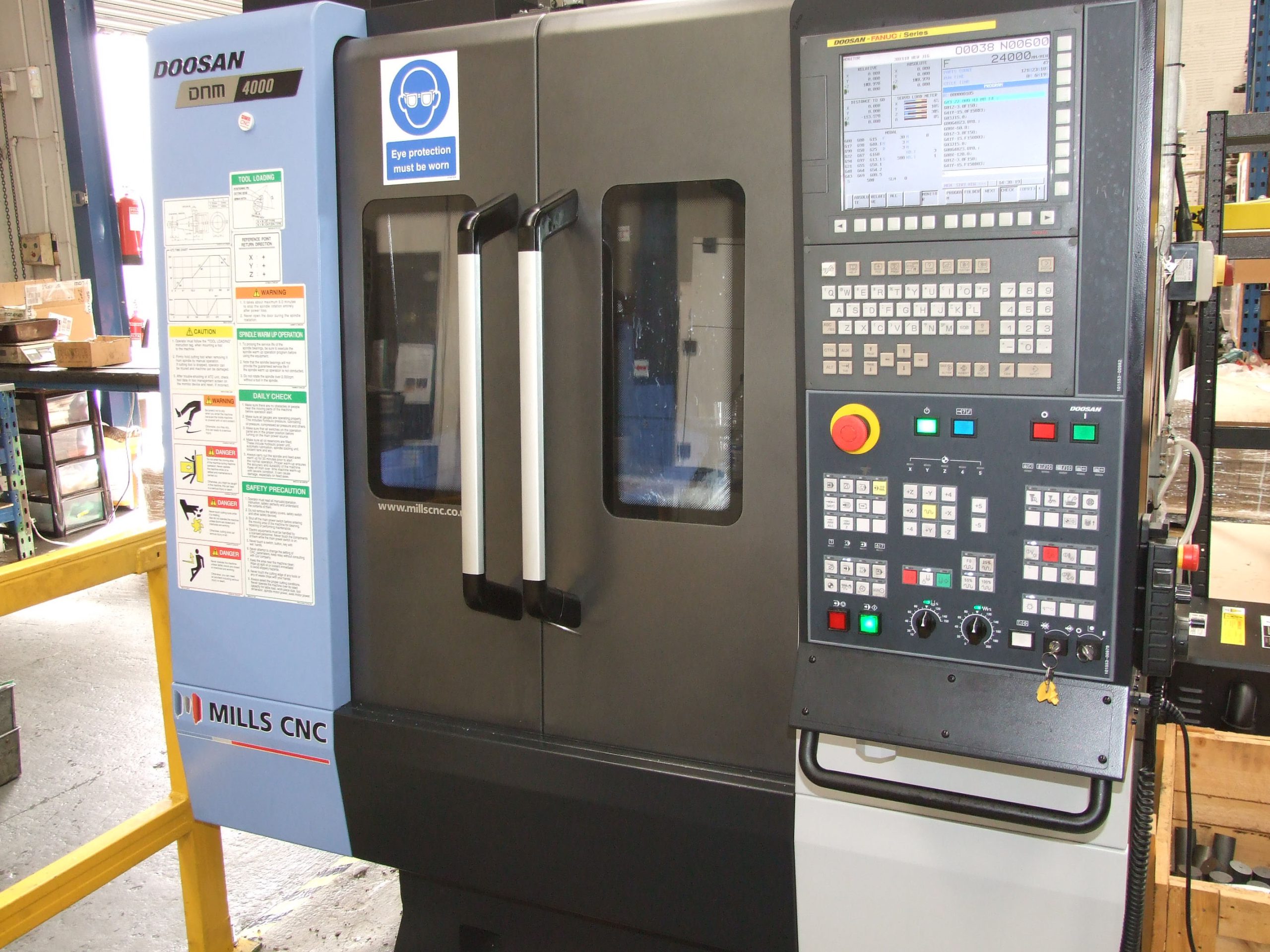 DNM 4000
The DNM 4000 is a compact, high-performance and fast (48m/min rapids) vertical machining centre equipped with a direct-drive spindle (18.5kW/12,000rpm) and a 20-position ATC. The machine was supplied with a 4th-axis unit to increase its flexibility and productivity potential.
The machine is being used to machine a ‘family’ of small fastener parts.
Says Mark Rattenberry:
“Despite its compact footprint the DNM 4000 certainly packs a punch and we have been impressed with its cutting capabilities and performance.
“To improve the productivity of the machine we have designed special purpose fixturing that enables multiple parts to be machined in a single set-up.”
Productivity and operational efficiency are critical to Mellish’s future growth and prosperity.
The investment in leading edge Doosan machine tools from Mills CNC combined with the company’s determination to ‘sweat its assets’ and continuously look at ways to optimise its machining processes means that Mellish is able to meet the surge in demand for its fastener products and solutions.
Concludes Mark Rattenberry:
“Our decision to go for API accreditation has been vindicated and business is booming. We are focused on maintaining our market-leader status in the oil and gas industry and capital investments, such as those made in Doosan machine tools from Mills CNC, will enable us to do this.”